

Gen Z and Millennials are subtly changing the way that society views race. Their strategy is very different from that of their parents and grandparents; it is more focused on destroying the systems that uphold injustice than it is on addressing personal prejudice. Their optimism, which is based on the belief that social justice is necessary for advancement rather than optional, is incredibly effective.
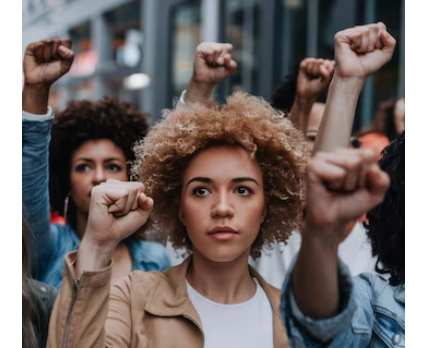
This generational shift is particularly evident in recent surveys. Two-thirds of Gen Z adults consider systematic racism to be a public health issue, and nearly three out of five think racial justice should be at the top of the government agenda. They seek open reform and link inequality to all facets of civic life, from access to healthcare to the standard of education. According to these results, a generation is especially committed to equity as a public benefit rather than a political stance.
Key Generational Insights
| Focus Area | Details |
|---|---|
| Generational Groups | Millennials (1981–1996) and Gen Z (1997–2012) |
| Core Social Priorities | Diversity, inclusion, fairness, and climate responsibility |
| Distinctive Traits | Tech-savvy, socially conscious, globally aware |
| Key Movements | #BlackLivesMatter, #StopAsianHate, #MeToo, LGBTQ+ advocacy |
| Political Influence | Drive for institutional accountability and reform |
| Educational Impact | Emphasis on equity, historical accuracy, and civic engagement |
| Reference Source | Pew Research Center, AAMC Center for Health Justice (2024) |
Meanwhile, millennials paved the way for this development. Millennials report much lower racial animosity ratings than earlier generations, according to political scientists who study racial sentiments. They are much more likely to support laws that remove structural impediments and to admit institutional discrimination. This increased consciousness signifies a markedly better comprehension of how bias functions—not as isolated animosity but as a systemic power disparity.
This change has been fueled by the extraordinarily adaptable force of digital activism. Online platforms that magnify underrepresented voices at a never-before-seen speed became the driving force behind movements like #BlackLivesMatter and #StopAsianHate. Because social media is instantaneous, activism happens far more quickly, enabling community donations, petitions, and protests to happen in real time. Younger generations view technology as a moral amplifier that promotes sincerity and exposes hypocrisy, rather than merely as a tool.
This modification feels very personal, which is what makes it so revolutionary. The diversity of Gen Z’s population—nearly half consider themselves to be members of a minority group—naturally fosters empathy. For them, inclusion is a lived standard rather than a theoretical idea. The emotional gap that formerly separated racial and ethnic groups has significantly decreased as a result of this daily exposure to diversity.
This development is even evident in the way they view themselves. Since over one-fifth of Gen Z adults identify as LGBTQ+, their idea of justice transcends racial boundaries. It encompasses class, gender, and sexual orientation. Because they understand how overlapping injustices reinforce one another, they see prejudice through an interrelated lens. Their activism is very effective because of their intersectional viewpoint, which unites disparate concerns around a common goal of justice.
But beneath the surface, there is simmering dissatisfaction. Many young activists think that organizations embrace diversity buzzwords without implementing fundamental change, a phenomenon known as performative inclusivity. Redistribution is frequently replaced by representation in universities and businesses. Gen Z and Millennials expect responsibility that is very concrete, such as transparent decision-making, diverse leadership, and fair compensation. They now demand diversity as structure rather than as ornamentation.
Their impact on politics is indisputable. These generations’ priorities are changing policy discussions, and their voter turnout is still increasing. They favor leaders who implement systemic change rather than those who make token gestures. Surprisingly realistic, they favor concrete equity-related policies—such as debt relief, criminal justice reform, and fair housing—instead of lofty platitudes about unity.
Their message has been amplified by cultural icons. Public personalities like John Boyega, Yara Shahidi, and Zendaya use their platforms to make socially conscious and emotionally grounded calls for equality. Their work effectively humanizes difficult situations by transforming statistics into relatable narratives. Their impact highlights a fact that this generation knows instinctively: whereas storytelling alters systems, representation alters perception.
Millennials are putting this philosophy into practice as they take on leadership positions. They are integrating anti-racism into company culture, promoting openness in corporate governance, and putting in place especially inclusive hiring procedures. They view leadership as responsibility rather than authority. This mentality change is incredibly resilient and establishes a new benchmark for management that is motivated by empathy.
Although statistics suggests otherwise, others doubt whether the internet activism of this age is performative. Millions of dollars have been raised through online mobilization for educational programs, legal defense funds, and community aid. This decentralized action is incredibly dependable at maintaining involvement, demonstrating that social consciousness adapts rather than fades.
This generational perspective has been significantly shaped by education. From colonialism to civil rights, racial history is being covered in more and more honest detail in curricula. Younger Americans are discovering that racism is a living heritage that necessitates active confrontation rather than being a relic. Their ability to question false information and oppose revisionist narratives has significantly increased due to their increased historical literacy.
Even so, change can seem to be happening slowly. Institutions frequently maintain antiquated hierarchies that prioritize familiarity above equity. However, Gen Z and Millennials are relentless. They are creating businesses, starting NGOs, and altering networks of policies aimed at achieving fair results. Their resolve, which is based on group rather than individual advancement, is incredibly resilient.
In their view, racism is procedural rather than just personal. They are tearing down, bureaucrat by bureaucrat, the unseen structure that perpetuates inequality. Their activism goes beyond protest; it rewrites culture, creates policies, and reinterprets what it means to belong. They have made diversity quantifiable and empathy actionable.
Therefore, the generational question is not if they can eradicate racism, but rather to what extent they can change its impact. Despite their enormous difficulty, they have a detailed plan that combines compassion, accountability, and education. They are rethinking justice itself by treating inequality as a social failure as much as a structural defect.
