

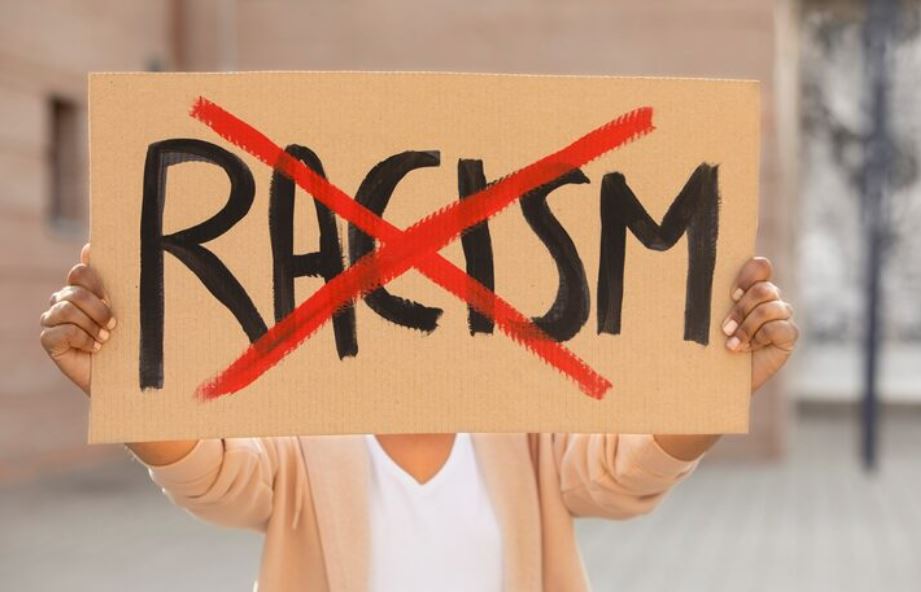
On the surface, American views on race have significantly improved over the last few decades. Intergroup friendships are becoming more prevalent, interracial marriage approval has increased dramatically, and overt racial prejudice has drastically decreased. Beneath this hopeful data, however, is a web of persistent disparities that are firmly established, like roots that won’t go away even when the tree above appears to be in good health.
The numbers tell a complicated tale. For example, residential segregation has not disappeared as rapidly as people believe. Over 80% of metropolitan areas had become more segregated by 2019 compared to thirty years earlier. Due to past redlining and discriminatory lending practices, this quiet division still determines who has access to better schools, safer communities, and long-term financial success. This inequality is still incredibly effective at perpetuating disadvantage in a country where a family’s home is frequently their largest investment.
| Category | Key Insight |
|---|---|
| Interracial Marriage | Approval rose from 4% in the 1960s to over 90% today, marking a notable cultural shift. |
| Housing Segregation | 81% of U.S. metropolitan regions remain more segregated today than in 1990. |
| Economic Impact | Racial discrimination cost the U.S. economy $16 trillion since 2000 (Citigroup Report). |
| Incarceration Disparity | Black Americans remain imprisoned at five times the rate of white Americans. |
| Health Outcomes | Black mothers are three times more likely to die from pregnancy-related causes. |
| Education Access | Minority-majority schools are significantly underfunded compared to predominantly white ones. |
| Implicit Bias | Persistent unconscious bias continues to influence hiring, sentencing, and healthcare. |
| AI and Data | Only 18% of medical datasets include people of color, embedding systemic bias into technology. |
| Wealth Gap | At the current pace, racial wealth parity may take over 200 years to achieve. |
| Public Perception | In 2025, fewer Americans acknowledged racial discrimination than in 2020, suggesting a decline in urgency. |
The same message is supported by economic data. The 2020 Citigroup report, which estimated that systemic discrimination against African Americans has cost the United States $16 trillion in GDP since 2000, was especially startling. It estimated that within five years, removing these obstacles could result in a $5 trillion economic boost. These are not arbitrary numbers; they reflect missed opportunities for innovation, lost companies, and unfilled jobs. It’s remarkably similar to wondering why the engine is having trouble moving forward while driving with the brakes applied.
The figures continue to be concerning in the legal system. Black people are still incarcerated at a rate that is about five times higher than that of white people, despite the fact that the gap between the two groups has somewhat decreased. Research shows that racial bias affects sentencing, frequently influencing decisions more so than the specifics of the offense. Though progress has been painfully slow and noticeably uneven, the difference may have slightly improved.
A different aspect of the same problem is revealed by public health. According to a UC Berkeley study, racism is a “chronic social toxin” that permeates all quantifiable facets of wellbeing. The maternal mortality rate for black mothers is three times higher than that of white mothers. Black people continue to be disproportionately affected by diseases like breast and prostate cancer. Discrimination causes stress, which in turn causes illness, so the link is not just medical but also social. What society forgets, the body remembers.
Meanwhile, a troubling connection between racism and cognitive decline has been brought to light by researchers at Nature. Black Americans who experience ongoing discrimination are more likely to develop dementia and Alzheimer’s disease. According to scientists, prejudice’s ongoing psychological toll speeds up biological aging, causing “premature weathering,” as one expert put it. It is about social forces reshaping biology, not just about injustice.
Statistics on education show equally alarming patterns. Minority-majority schools continue to have fewer resources, hire teachers with less experience, and provide fewer STEM or advanced placement programs. that economic futures are shaped by educational inequality. The fact that zip codes continue to predict a child’s future with almost perfect accuracy in a country known for its opportunities is especially ironic.
Despite this, optimism endures because change is still evident, albeit slowly. The prevalence of interracial friendships today reflects a generational openness that was unimaginable fifty years ago. Raised in diverse communities, younger Americans show much less tolerance for overt discrimination. Although implicit bias is still a problem, there has been a noticeable improvement in public awareness of it. Numerous businesses, academic institutions, and media outlets have made investments in diversity audits and training initiatives; these are sincere attempts at accountability, despite their flaws.
Public opinion, however, is changing in intricate ways. According to a nationwide survey conducted in 2025, 15% fewer Americans now think that there is still significant racial discrimination against Black people. This is interpreted by some as a sign of perceived progress. Others perceive it as a retreat from the reckoning that came after 2020 and a sign of complacency. Sociologists warn that when people lose faith in racism, they also lose faith in its need to be addressed.
New, unseen battlefields have emerged with the advent of the digital age. These days, algorithms decide who gets loans, jobs, and even medical advice. However, these systems frequently rely on biased historical data. AI subtly increases inequality in the present when it carries over prejudice from the past. It is a contemporary echo of past injustices, but this time they are carried by code rather than by human hands. Because it appears to be neutral, this technological bias is especially worrisome.
These disparities are still evident in housing statistics. In neighborhoods with a majority of Black residents, the average home value is approximately $135,000, while in areas with a majority of white residents, it is $219,000. This disparity results in fewer opportunities to transfer wealth between generations, restricted equity growth, and restricted loan availability. The compounded advantage that home value provides over time is more important than ownership alone.
The continued existence of racism’s more subdued manifestations shows how discrimination changes rather than goes away. Implicit bias, or those silent, subconscious judgments, is still hard to eradicate, even though explicit bias has greatly decreased. It has incredibly subtle yet significant effects on healthcare outcomes, classroom expectations, and hiring decisions. Future generations’ emotional architecture is shaped by these biases, which are socially passed down from parents to children—often without their knowledge.
Nevertheless, advancement is undeniable. Racial attitudes have drastically changed over the last 60 years. This dialogue’s very existence, once suppressed or disregarded, signifies change. The difficult task of systemic reform now defines America’s racial narrative rather than overt animosity. The data indicates decline but not disappearance, which is an important distinction that necessitates perseverance and patience instead of giving up.
Society gets closer to true understanding by recognizing these hidden numbers. Despite a statistical decline, racism’s legacy endures in institutions, economies, and algorithms. Even though it is uneven, the decline is quantifiable. The advancements made and the obligation to maintain them are passed down to each generation.
