

Graphs are rarely necessary to understand the story of inequality; it may be tasted. Wrapped in the distinction between instant noodles and organic food, it silently rests on dinner tables. The statement “The Price of Inequality Measured One Meal at a Time” sums up a reality that seems especially pertinent in the modern world: our diets show how different we really are, more so than our incomes.
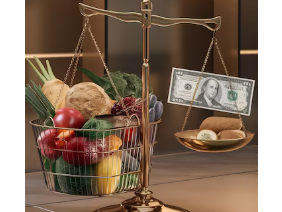
The price of food has come to represent economic status in countries ranging from Lagos to Los Angeles. Millions of people must make daily decisions about what to forgo, what to stretch, and what to replace due to rising costs for necessities like bread, eggs, and rice. Inflation may force wealthy families to switch from imported to local olive oil. For households with lesser incomes, it means choosing between petrol and groceries. The true cost of inequality is that decision, which is made again and in silence.
Key Insights on “The Price of Inequality Measured One Meal at a Time”
| Aspect | Description |
|---|---|
| Concept | Examines how economic inequality is revealed through food access, pricing, and consumption |
| Economic Significance | Links rising essential food costs to disparities in income and living standards |
| Main Indicators | Gini Coefficient, Theil Index, and Consumption-Based Inequality Models |
| Core Idea | Rising prices of basic goods disproportionately affect lower-income families |
| Societal Impact | Deepens divisions in health, nutrition, and economic mobility |
| Reference Source |
Traditionally, economists use metrics like the Theil index or the Gini coefficient to quantify inequality. However, these quantitative methods frequently overlook the personal, everyday experiences that characterize the full scope of inequality. In its most basic form, food is a more human metric. The natural tendency of market systems to favor the powerful is revealed when the cost of necessities increases more quickly than that of luxuries.
Inequality in consumption has grown more apparent in recent years. Millions of people experienced food poverty as a result of the pandemic, which also caused a spike in gourmet delivery services and upscale dining. One side of the divide is clogged by scarcity, while the other glides effortlessly toward excess, creating a starkly analogous contrast to a two-lane highway. Food banks are now as necessary as grocery shops, even in wealthy nations, which is a silent monument to inequity.
Eating has become a kind of triage for many families. To allow children to eat, parents miss meals. Discounted groceries that hardly last a week are what students rely on. Additionally, lineups outside food pantries are longer than those for Michelin-starred brunches in wealthier cities. No policy study could ever adequately depict inequality like these pictures do.
Through the analysis of consumption patterns, researchers have discovered that food access is frequently the area where inequality is most evident. The cost of necessities causes the economic ladder to harden rather than merely broaden. Every price increase is felt more keenly by those at the bottom. Richer households may change their spending plans or tastes, while poorer households must deal with hunger, malnutrition, and long-term health issues.
This disparity is especially noticeable when comparing diets. Richer customers typically consume meals high in organic products, lean meats, and fresh produce—eating habits that are both socially and healthfully satisfying. Consumers with lower incomes frequently turn to manufactured foods that are high in calories but low in nutrients. This eventually causes differences in life expectancy, cognitive development, and health outcomes.
Inequality is self-defeating because it threatens economic stability, according to the late economist Joseph Stiglitz. Examining that observation via the lens of food makes it feel very evident. In addition to moral repercussions, societies with unequal access to nutrition also experience economic stagnation. Reduced productivity, poor health, and increased demands on public health systems are all consequences of poor diets. A inexpensive dinner today can have expensive repercussions tomorrow.
The dinner plate has evolved into an economic indicator in many respects. Think about how, in many nations, the cost of a basic meal consisting of bread, milk, and eggs has been rising consistently. It is a life-altering change for a household that lives paycheck to paycheck. Inequality not only endures but intensifies when necessities rise more quickly than earnings.
In order to present a more realistic view of economic life, some economists increasingly employ “consumption-based inequality.” This method examines what people can really buy, exposing the lived experience of economic disparities, in contrast to income-based models that concentrate on incomes. It demonstrates how the gap between those who simply adjust and those who must make sacrifices grows when necessities like food and electricity take up greater percentages of household budgets.
This divide’s social side is just as illuminating. Celebrity chefs like Marcus Samuelsson and José Andrés have filled the void by serving justice in addition to cooking. Access to food is a human right, not a privilege, according to Andrés’ World Central Kitchen, which serves millions of meals in disaster areas. Samuelsson’s work in Harlem addresses food insecurity while elevating regional cuisines; this is an encouraging illustration of how compassion and visibility may subvert the narrative of injustice.
Crisis situations are frequently the catalyst for public reactions to inequality. Communities set up local gardens, pop-up kitchens, and delivery services for people without access to reasonably priced food during the pandemic. Even though these actions were modest, they had a remarkable impact on society by serving as a reminder that capitalism and solidarity can coexist. However, maintaining such efforts necessitates policy reform in addition to goodwill.
With differing degrees of success, governments have started to react. The European Union has increased its subsidies for healthier diets and locally grown vegetables. In order to guarantee that kids from all walks of life receive wholesome lunches, Seoul implemented universal school meals. Additionally, experimental projects in a number of American towns have made it possible for citizens to utilize food stamps at farmers’ markets, which is a very creative step that helps local farmers and low-income families.
The structural issue persists despite advancements: the cost of necessities keeps rising but low- and middle-class workers’ wage growth has stagnated. Food inflation has subtly evolved into a new, more intrusive kind of inequality. Fairness turns into a survival tactic rather than a social ideal when a family’s finances are stretched by a loaf of bread or a gallon of milk.
But there’s a good reason to remain hopeful. Societies can move from monitoring inequality to actively eliminating it through improved food policy, community initiatives, and data transparency. The relationship between accessible commodities, fair salaries, and public health is very evident, and governments that take action will create communities that are healthier and more cohesive in addition to better economies.
