

One of the most startling legal outcomes in the history of contemporary American media is Alex Jones’ demise. After being forced to pay over $1.5 billion in defamation damages, the Infowars host—once renowned for his fiery broadcasts and belligerent demeanor—now faces financial ruin. His reputation as a rebellious pundit has been turned into a warning example of careless misinformation due to the lawsuits, which are focused on his repeated incorrect claims regarding the 2012 Sandy Hook Elementary School shooting.
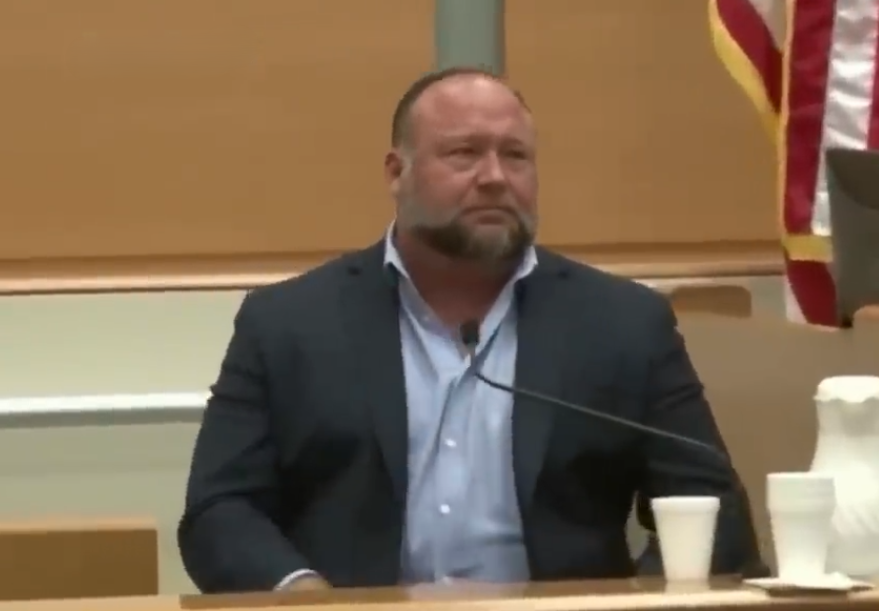
The two historic rulings against Jones, which totaled $1.4 billion in Connecticut and $49 million in Texas, are among the highest defamation damages in history. They were intended to convey a strong message about accountability in addition to providing financial compensation to the victims’ relatives. Jones wrongly claimed for years that the incident, which claimed the lives of 20 children and six adults, was a government fake. Millions of people saw his claims, which led to death threats, harassment, and emotional distress for bereaved parents.
Alex Jones – Biography and Case Summary
| Information | Details |
|---|---|
| Full Name | Alexander Emerick Jones |
| Born | February 11, 1974 – Dallas, Texas, USA |
| Profession | Radio host, conspiracy theorist, founder of Infowars |
| Legal Outcome | Ordered to pay approx. $1.5 billion in total damages |
| Main Allegation | Defamation of Sandy Hook families |
| Key Judgments | $1.4 billion (Connecticut), $49 million (Texas) |
| Company | Free Speech Systems, parent of Infowars |
| Authentic Reference |
The major part of the total, $964 million in compensatory damages and $473 million in punitive fines, came from the Connecticut verdict. It was an uncommon, broad decision that showed the court system’s increasing readiness to address harm caused by the media. The judge made it very evident that Jones’ practice of obstruction and dishonesty would not go unpunished after finding him in default for failing to comply with discovery and produce documents.
The course of the Texas case was remarkably similar. Another family impacted by Jones’s statements received an award of almost $49 million when a different jury held him guilty for defamation. Despite its smaller scope, the decision upheld the same idea: justice will ultimately be heard when lies result in real suffering. When taken as a whole, these cases represented a turning point—a strong protest against the acceptance of conspiracy-based media.
Jones has made a noticeable effort to avoid accountability. In late 2022, he declared bankruptcy, claiming that the victims had “no realistic hope of collecting” the entire sum. However, because of his continued commercial endeavors and attempts to conceal assets, judges have been dubious of his claims. Investigators are still monitoring the finances of his company, Free Speech Systems, which runs Infowars. Jones has been charged by a number of judges with transferring money to family members and insiders in order to safeguard his fortune.
Jones’ appeal was denied by the U.S. Supreme Court in recent months, so upholding the $1.4 billion Connecticut decision. The choice, which was made without comment, was extraordinarily definitive because it ended his last chance to avoid the moral and financial repercussions of his actions. It also demonstrated the court’s refusal to conflate deliberate defamation with free speech.
Since then, the focus of bankruptcy proceedings has switched to Jones’ asset liquidation. To help pay for the judgments, some of his personal property, such as expensive cars and real estate, is being liquidated. The procedure has been tumultuous; at one time, The Onion, a satirical publication, made a lighthearted bid to buy Infowars’ assets. Despite being rejected, the bid demonstrated how Jones’ once-dominant media empire had turned into a legal farce. A receiver is currently in charge of the liquidation process after the case was moved to a Texas court.
This issue has always involved more than just money for the Sandy Hook families. After years of constant harassment, it’s about regaining one’s dignity. Numerous parents recounted how Jones’ supporters, emboldened by his broadcasts, accused them of fabricating the deaths of their children. Some had to move, while others were stalked. As a result, the rulings are more than just pecuniary; they also serve as a moral remedy for years of brutality that were passed off as commentary.
Jones’ story is especially insightful about how public debate is evolving. His brand of conspiratorial discourse, which played on mistrust and anxieties, flourished for decades on sensationalism and indignation. But his demise has significantly changed how people view media accountability. According to legal experts, this decision may change the way courts deal with online disinformation, particularly when it causes harm in the real world. It sets a precedent that truth cannot be altered without repercussions, even though it is subjective in many contexts.
Jones’ experience reflects the contemporary conflict between accountability and influence in many ways. Millions of people used to listen to his broadcasts because they saw him as a rebel against authority. However, that same influence—unchecked, unconfirmed, and magnified—finally proved to be his downfall. What started out as a defiant media empire has turned into a cautionary tale about the price of misusing free speech for financial gain.
The financial ramifications are enormous. According to analysts, Jones will still be responsible for hundreds of millions of dollars in unpaid damages even after filing for bankruptcy. His once-strong revenue sources from products and supplements have significantly decreased. According to reports, some former workers have departed Free Speech Systems, alleging pressure from the law and financial difficulties. Once a multimillion-dollar empire, it has now devolved into a meaningless representation of extravagance and moral decay.
Additionally, this issue has spurred more general political and media reflection. A broader cultural movement toward accountability is seen in the expensive defamation actions that prominent figures like Fox News and Rudy Giuliani have had to deal with because of false material. All of these decisions point to the end of the era of deception that has no repercussions. It appears that the tide is shifting in favor of truth, a concept that is extremely tenacious despite its fragility.
Jones continues to hold online broadcasts outside of courtrooms, claiming he is being punished for speaking out against the status quo. However, his impact has been greatly reduced. The public’s view of him has changed as a result of the decisions’ emotional impact and the constant legal scrutiny. His voice reverberates in a digital environment that has grown tired of unrelenting indignation, and he is still defiant but becoming more and more alone.
These decisions have given the Sandy Hook families more than just restitution; they have given them recognition. They have restored their loved ones’ humanity in the public eye after more than ten years of combating misinformation. Their bravery in the face of years of cyberbullying has turned into a timeless model of fortitude, a subdued yet potent contrast to Jones’ turbulent years.
One fact has come to light with remarkable clarity as the judicial process progresses: lies have their limitations. Despite their enormous financial impact, the Alex Jones lawsuits represent something far bigger: the recovery of truth in a noisy age. His demise is an incredibly powerful reminder that accountability is just as important as free speech.
