

The lawsuit filed by Ethan Duran has turned into a warning about the potential for luxury branding and digital deceit to coexist. After authorities took hundreds of thousands of dollars in assets linked to a $735,000 judgment, Duran, who was formerly lauded for his personality and apparently successful exotic automobile venture, is now facing significant legal issues. For a man who established his reputation for quickness, flair, and salesmanship, the Miami-Dade County Sheriff’s Department raid at his Miami home represented a significant shift.
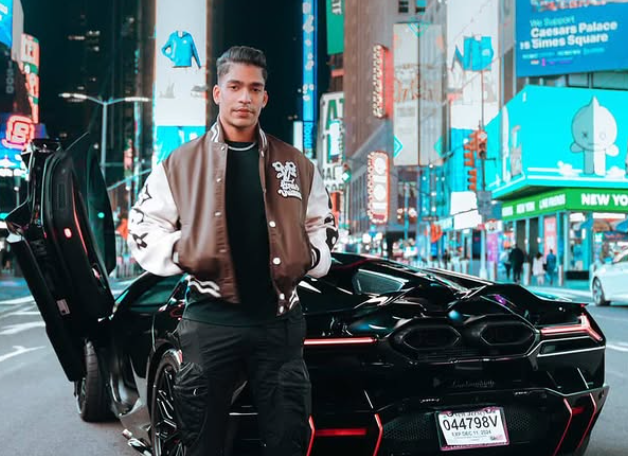
The most serious accusations made against Duran are related to alleged fraud committed by his business, Corsa Autogroup. The victims claim that offers of access to rare cars and lucrative investment opportunities drew them into his sphere. On the surface, these proposals, which were frequently made with extraordinary assurance and sophistication, seemed genuine. However, the facade started to fall apart as more customers started to encounter unreturned deposits, undeliverable autos, and evasive responses.
Ethan Duran – Background and Legal Details
| Information | Details |
|---|---|
| Full Name | Ethan Duran |
| Known For | Founder of Corsa Autogroup, accused in exotic car scam |
| Legal Allegations | Fraud, false representation, and asset misappropriation |
| Legal Status | Facing a $735,000 judgment; assets seized in Miami |
| Law Enforcement Involvement | Miami-Dade County Sheriff’s Department, FBI |
| Related Individuals | Brandon Medford, Aaron Grant (Hathaway) |
| Location | Miami, Florida |
| Reference |
The story’s first plausibility is what makes it remarkably comparable to other recent financial catastrophes. High-performance vehicles, fancy outfits, and extravagant social media posts that represented success surrounded Duran’s operations. But there was a habit of dishonesty hidden beneath the polish. Numerous victims reported how Duran’s team created an incredibly authentic impression of legitimacy by using expertly written contracts, expert websites, and even showroom tours.
According to reports, Duran had amassed enormous quantities of money by the time victims discovered they had been duped, leaving behind unpaid invoices and unfulfilled promises. The legal system started to tighten its hold as the number of litigation increased. To recoup some of the $735,000 judgment, Miami authorities sought to take his real estate holdings, luxury automobiles, and watches through a writ of execution. Soon after, the FBI started looking into potential connections between Duran and crimes of a similar nature in New York and other states.
With accountability as their common objective, victims from all around the nation are now coming forward. According to reports, lawyers in Miami and New York are gathering bank records and declarations in order to construct a thorough legal case. For many, the goal of this endeavor is to restore dignity rather than just get their money back. One lawsuit explained how trust in charismatic entrepreneurs has declined dramatically in recent years, calling the encounter “a betrayal that cuts deeper than financial loss.”
Discussions over the glamorization of entrepreneurship have also been rekindled by the case. By driving rare supercars, going to VIP parties, and posing with celebrities, Duran’s social media profile conveyed an air of effortless success. He appeared to his supporters as the epitome of contemporary ambition. However, these carefully chosen photos that previously evoked awe are being used as proof in a federal inquiry. The contrast is especially illuminating, demonstrating how the outward manifestation of achievement can frequently conceal hidden deception.
Connections between Duran and other characters, specifically Aaron Grant (Hathaway) and Brandon Medford, are coming to light as investigators continue their investigation. In different ways, all three were linked to luxury car businesses that provided easy access to opulent lifestyles. False ownership claims, exaggerated pricing, and unmet contracts are some of their stated strategies, which demonstrate how contemporary frauds increasingly rely on perception rather than product. Authorities keeping an eye on cross-state financial crimes are becoming increasingly concerned about this network, despite its unofficial connections.
It makes sense that the public’s response has been strong. Although ambitious businesses have always been drawn to Miami’s culture of wealth and prestige, opportunists who survive on appearances have also emerged. Particularly for young investors and entrepreneurs seeking quick success, the Ethan Duran case has come to represent caution. The lesson is pretty clear: not all that glitters is gold, and not all entrepreneurs that show off their luxury have done so in a way that is legal.
The case provides a framework for comprehending the workings of contemporary financial fraud for investigators looking into Duran. This plan flourished in broad sight, unlike old scams that were carried out in secret, thanks to digital advertising, influencer endorsements, and social media credibility. The strategy was especially novel in the way it combined offline dishonesty with online celebrity. Because of his genuine and accessible online persona, Duran was able to win over customers who never thought they would be duped.
According to a number of legal experts, this case may establish a standard for the prosecution of fraud cases that are based online. Digital identities have evolved into effective credibility-boosting tools that frequently take the place of conventional business references. “People now judge trustworthiness by Instagram engagement rather than professional credentials,” one lawyer observed. Despite being modern, that change has proven especially risky. It demonstrates how perception can quickly take the place of verification if it is not checked.
Since Duran’s downfall, there has been a noticeable improvement in victim cooperation. People are encouraged to connect with legal resources and share their experiences through the emergence of investigative collectives, social media groups, and online forums. This group effort is quite effective in raising awareness and making sure that other people don’t fall for the same scams. Additionally, it shows a shift in culture toward accountability, where being exposed is seen as a form of justice in and of itself.
The fact that the FBI is involved shows how serious this situation is. According to reports, federal agencies are investigating whether Duran’s actions crossed state lines, raising the possibility of conspiracy or wire fraud. This might turn a civil lawsuit into a full-fledged criminal prosecution if verified. Such a rise would be quite noteworthy, indicating that the age of fraud driven by social media is finally encountering strong judicial opposition.
The public’s interest is still growing despite the legal chaos. The speed at which Duran’s reputation crumbled has captivated many observers. A few months ago, he was seen as a representation of youthful ambition; now, he is associated with dishonesty and avarice. It’s a dramatic and educational transformation. It serves as a reminder to viewers that, despite the fading of illusions under examination, sincerity is very resilient.
The Ethan Duran case is a wake-up call and a warning to Miami’s entrepreneurial scene. It emphasizes how important it is for luxury industries, especially those based on exclusivity and image, to be transparent. Discussions concerning consumer protection, accountability, and the need for law enforcement to adjust to new financial manipulation techniques that conflate fraud and marketing have been triggered by the incident.
