

Noel Clarke’s financial path is reminiscent of a movie’s ascent and decline; it’s a gripping story of genius, success, and failure. After years of legal disputes, canceled contracts, and missed opportunities, Clarke’s fortune—once hailed as one of Britain’s most significant Black filmmakers—has now shrunk to $3 million (£2.21 million). Once evidence of his hard-won fame, his wealth now serves as a warning of how quickly creative empires can fall apart when reputation and trust erode.
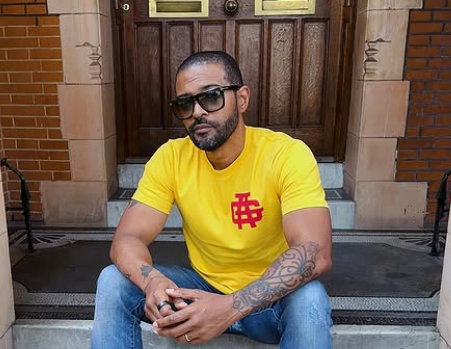
The last nail in a years-long tale that altered Clarke’s career and financial situation came in 2025 when a High Court judge declared that The Guardian’s misconduct claims against him were “substantially true.” With £3 million due in 28 days and £6 million in legal fees owed, the ruling essentially erased the majority of Clarke’s remaining wealth. “I lost my job, my savings, my legal team, my ability to support my family, and much of my health,” he admitted to the court. The stark, unadorned phrase perfectly conveyed the extent of his decline.
Noel Clarke — Personal, Career, and Financial Summary
| Category | Details |
|---|---|
| Full Name | Noel Anthony Clarke |
| Date of Birth | December 6, 1975 |
| Birthplace | Notting Hill, London, England |
| Occupations | Actor, Writer, Director, Producer |
| Years Active | 1999 – Present |
| Spouse | Iris Da-Silva |
| Children | Four |
| Known For | Doctor Who, Kidulthood, Bulletproof |
| Net Worth (2025) | Approximately $3 million (£2.21 million) |
| Legal Costs Owed | £6 million ($8 million USD) to The Guardian |
| Verified Source |
Clarke’s career was incredibly successful in changing British cinema prior to this unraveling. He combined creativity with a keen sense of cultural critique to become a new and genuine voice for marginalized people. His breakthrough performance was in Doctor Who, where he played Mickey Smith, endearing and entertaining a worldwide audience. However, Kidulthood (2006), Adulthood (2008), and Brotherhood (2016) cemented his reputation as an auteur, a writer-director who can turn street stories into critically and commercially successful motion pictures.
Beyond performing, Clarke produced and directed productions that showed his profound understanding of working-class life through his company Unstoppable Entertainment. His films were especially avant-garde; they showed urban adolescents with nuance and empathy. Together with actor Ashley Walters, the company’s collaboration with Sky One for Bulletproof (2018–2021) put Clarke at the pinnacle of his power and established him as a powerhouse that was revolutionizing television drama.
Bulletproof’s popularity also resulted in increased license agreements and large payouts. According to reports, Clarke’s combined acting, writing, and production activities brought in over £1 million a year during the height of his career. His riches was subsequently enhanced by foreign contracts, BAFTA appearances, and endorsements. It appeared that his position among the nation’s top creatives was assured when BAFTA presented him with the Outstanding British Contribution to Cinema Award in 2021.
But that same year turned out to be crucial. After The Guardian revealed 26 women’s accusations, Clarke’s career took a serious turn for the worst. Contracts were discontinued, his agency severed links, and his award was suspended. Unstoppable Entertainment lost important partners, and Sky dropped Bulletproof from its portfolio. His sources of money vanished in a matter of weeks. He eventually filed a lawsuit against The Guardian, which only made the fall worse and cost him both credibility and money.
The financial consequences were particularly dire. His London real estate holdings, which were formerly worth around £2 million, might be liquidated to pay off court obligations. As platforms distanced themselves from his work, ongoing projects were shelved and streaming earnings decreased. Industry insiders claim that after networks stopped reruns, even modest distribution royalties from Kidulthood and Adulthood dropped precipitously.
The story of Clarke is quite similar to other well-known incidents in international entertainment when accusations completely changed careers. However, Clarke’s losses have not been made up for by new endeavors or public rehabilitation, in contrast to celebrities like Kevin Spacey or Johnny Depp. The High Court’s decision eliminated any chance of a resurgence, at least for the near future. His inaction since the decision points to an internal reflection that prioritizes stability over public validation.
Clarke’s influence as a filmmaker endures despite his financial downfall. A new generation of Black British creatives, including filmmakers like Rapman and actors like John Boyega, are now flourishing in mainstream cinema because to his work. Industry insiders frequently attribute Clarke’s early films to changing the story of metropolitan Britain and demonstrating that social reality and commercial success could coexist. In this way, his contributions to the cultural fabric of contemporary British media continue to be very advantageous.
Nevertheless, his demise has prompted challenging discussions about notoriety, responsibility, and artistic autonomy. Since then, the entertainment sector has implemented extremely effective workplace ethics and inclusion regulations, partly as a result of the outrage surrounding his case. In certain respects, Clarke’s disintegration has sparked institutional change, a paradox that emphasizes how advancement can come from human failure.
Clarke currently lives in peace and quiet in London with his wife, Iris Da-Silva, and their four kids. He is described by friends as being very introspective, family-oriented, and looking at methods to reestablish his artistic legacy through mentorship programs and independent work. According to those close to him, he continues to write every day, drafting screenplays that might never be produced but maintain his creative spirit.
