

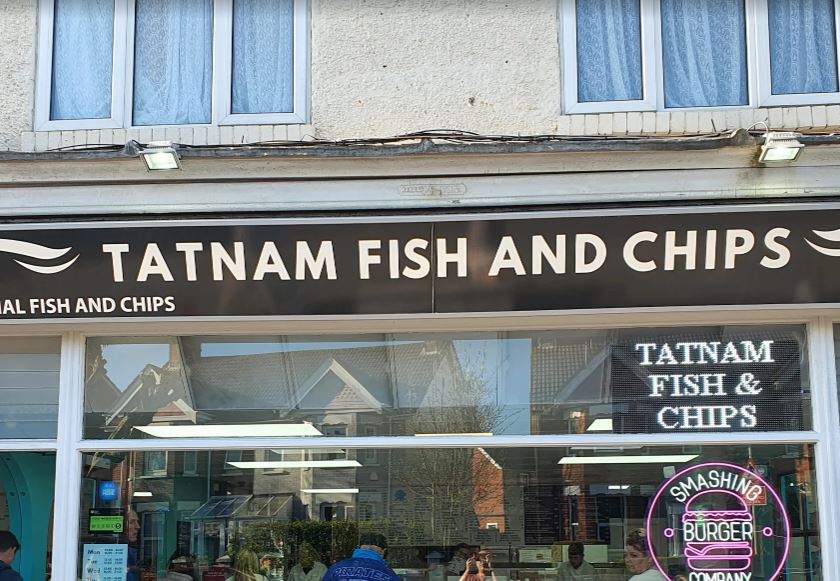
For many people in Poole, Tatnam Fish and Chips has come to symbolise what Harrods means to London shoppers: a place where quality is expected and consistently provided. Here, however, the luxury is wrapped in paper, served hot, and consumed with fingers as opposed to forks.
In a field where shortcuts are common, the owners, Ellie and Jon, have created something incredibly effective. Every order is prepared fresh, every fish piece is expertly fried, and chips are made every day from seasonal potatoes. With batter that snaps lightly and chips that taste both fresh and comforting, this daily rhythm creates food that is remarkably clear in flavor.
| Detail | Information |
|---|---|
| Name | Tatnam Fish and Chips |
| Location | 4 Tatnam Crescent, Poole, Dorset, BH15 2HG, England |
| Owners | Ellie & Jon |
| Cuisine | Traditional British Fish & Chips, Seafood, Burgers, Sides |
| Specialties | Cod, Haddock, MSC Certified Fish, Homemade Tartare, Fresh Chips |
| Price Range | £1 – £10 |
| Opening Hours | Mon–Thu: 5–8:30pm; Fri: 12–1:30pm, 5–9pm; Sat: 5–9pm; Sun: 5–8:30pm |
| Rating | 5-Star Hygiene, 4.7/5 Reviews |
| Sourcing | Responsibly sourced fish, seasonal potatoes, MSC certified cod & haddock |
Tatnam is unique not only because of its cuisine but also because of its sense of self. Along with its mainstays, the store now serves burgers, pies, sausages, and cool summer drinks, making it incredibly versatile. For families, it means that various cravings can be satisfied without compromising during a single visit. The lunchtime specials, which bring back memories of a time when chippies were about value and nourishment rather than just novelty, make the prices surprisingly reasonable.
Reviews frequently highlight how dependable the staff is, with Ellie standing out for her warm welcome to regulars. Their philosophy—a takeaway that cares as much about people as it does about plates—is aptly encapsulated in one story about employees helping a customer with mobility issues. Tatnam serves as a reminder of the emotional bond that food is supposed to forge in a time when service can seem impersonal.
Tatnam’s environmental policies are especially creative. They have greatly decreased the amount of plastic waste by using biodegradable bags and packaging. Today’s diners, many of whom share the same values as celebrity chefs like Hugh Fearnley-Whittingstall who promote sustainable food, will find resonance in this practical commitment rather than a marketing ploy. It serves as a reminder that small businesses, not just large corporations, can take on responsibility.
Tatnam’s fish and chips have a nostalgic flavor. Consumers frequently comment that it brings back memories of childhood dinners or summers by the sea, which are particularly memorable. Tatnam has perfected the art of restraint: no extravagance, just genuine food that has been thoughtfully prepared, much like Gordon Ramsay demands simplicity in his fish and chips.
A special place has always been reserved for fish and chips in British culture. Famously, Winston Churchill exempted the dish from wartime rationing because he thought it was essential for morale. Tatnam exemplifies this same attitude of consolation in trying times in Poole. In addition to providing nourishment, the meal turns into a ritual that unites the community and is incredibly powerful.
A mirror is provided by celebrity culture. While Nigella Lawson frequently emphasizes the emotional appeal of simple meals, David Beckham may garner media attention for indulging in fish and chips with his family. Tatnam fits into this story, demonstrating that respecting tradition rather than inventing it is the path to excellence. Ellie and Jon have been able to concentrate on flavor and service by simplifying their business processes, which has allowed them to build their reputation with each wrapped portion.
The variety of British cuisine has significantly increased over the last ten years, with vegan shawarma, ramen, and sushi proliferating on high streets. However, Tatnam has prospered by providing a very dependable service: well-prepared comfort food. They have stayed true to their heritage while adapting to shifting tastes by utilizing consistent execution and responsible sourcing.
Tatnam’s role holds cultural significance for Poole. While locals view it as a weekly anchor, tourists find it as part of their trip and are frequently enchanted by its classic flavor. This dual function demonstrates how independent stores support social and economic life and fortifies ties within the community. It is especially helpful at a time when chains rule urban areas, but independent businesses like Tatnam demonstrate their tenacity through excellence.
Tatnam’s story Fish and Chips is more than just food; it’s about how tradition, care, and accountability turn a simple takeaway into a landmark. It demonstrates how a small business with a strong sense of community, efficiency, and attention to detail can have a big impact. Tatnam serves as a local symbol of hope, demonstrating that even modest deeds of commitment can still influence cultural identity, much like Jamie Oliver’s push for healthier school lunches or Mary Berry’s celebration of home cooking.
Tatnam upholds Britain’s most enduring culinary tradition by serving every bag of chips hot and treating every customer with kindness. It illustrates how a simple meal can feel not only satisfying but also deeply meaningful when it is prepared with love and responsibility.
